

What does hydro excavation cost in Australia?
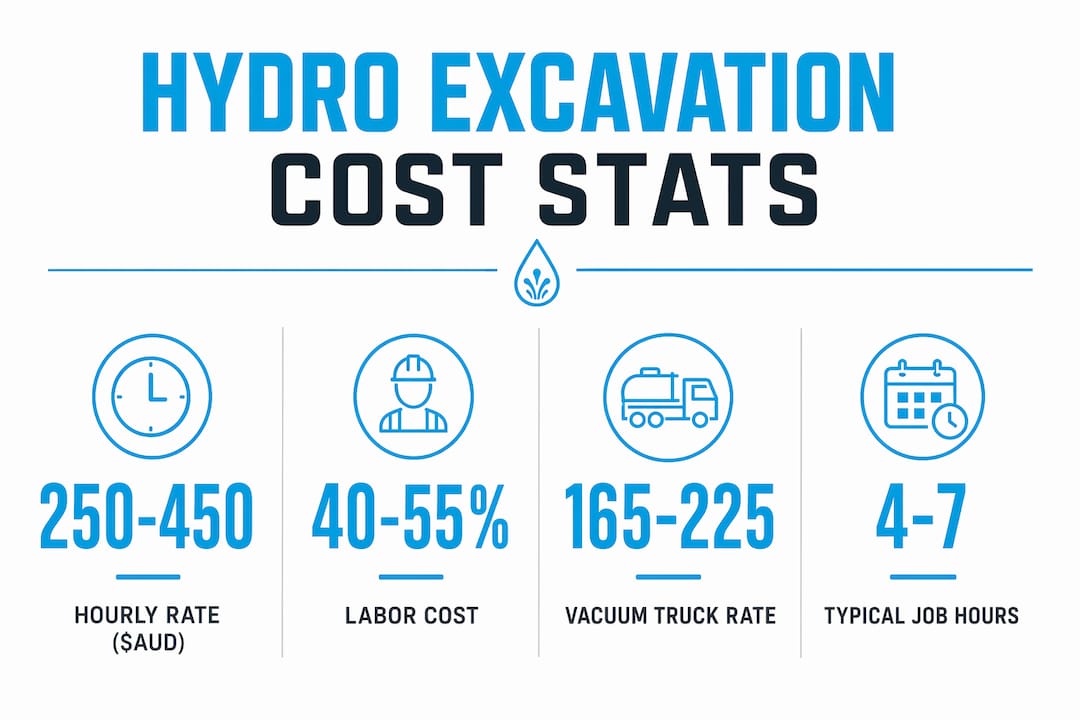
Hydro excavation in Australia is priced by the hour, not by volume. That distinction matters for budgeting because soil conditions, site access, and project complexity vary too much for per-cubic-meter pricing to be reliable. Hourly rates vary depending on truck size, crew configuration, and location. Daily rates typically fall within a range suitable for full-shift engagements.
| Pricing Model | Typical Range (AUD) |
|---|---|
| Hourly rate (typical truck size) | $250–$450 per hour |
| Daily rate (full shift) | $3,500–$4,500 per day |
| Compact NDD unit (wet hire, per day) | $250–$500 per day |
| Industrial NDD unit (wet hire, per day) | $1,000–$3,000 per day |
Core cost components on every hydro excavation invoice include:
- Labor: Operator and crew wages, typically the largest single line item
- Equipment usage: Truck hire, fuel, and maintenance recovery
- Disposal fees: Licensed transport and tipping of excavated slurry and debris
- Mobilization: Travel to and from site, especially on regional or remote jobs
Table of Contents
- What factors drive hydro excavation pricing up or down?
- How does the hydro excavation process work, step by step?
- When is hydro excavation the right choice for your project?
- Typical job sizes, cost scenarios, and hidden fees to watch for
- How to budget effectively and get the best price
- Why credentials and safety standards affect your total cost
- How do hydro excavation costs vary across Australian regions?
- How does hydro excavation compare to traditional excavation methods?
- Breaking down labor, equipment, and disposal costs
- How project timelines affect your total spend
- Pressureworks delivers reliable hydro excavation across Victoria
- Key Takeaways
What factors drive hydro excavation pricing up or down?
Soil type is the most direct lever on cost. Soft loam excavates quickly; hard clay or fractured rock demands longer water pressure dwell times and more vacuum cycles, adding billable hours with no change to the quoted rate. A job that takes two hours in sandy soil can stretch to five in compacted clay.
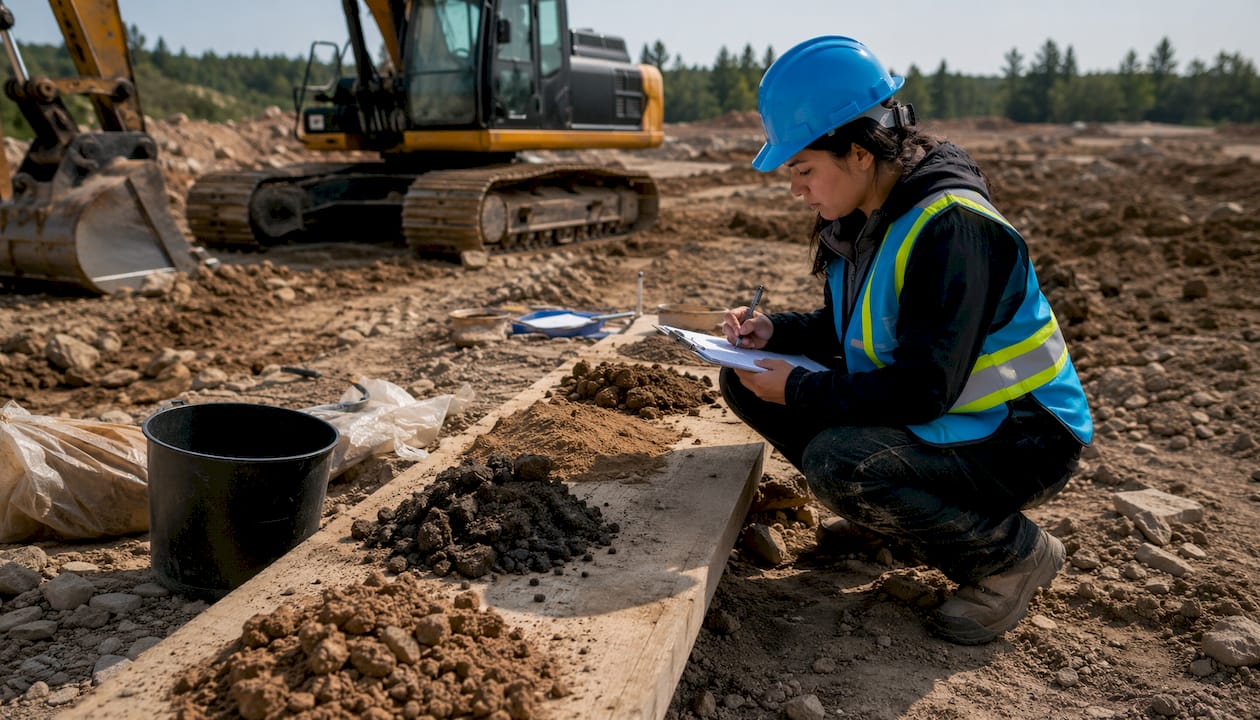
Equipment size and technology also shift the number significantly. Compact non-destructive digging (NDD) units suit tight urban sites but have smaller tank capacities, requiring more frequent disposal runs. Larger industrial trucks carry more volume per cycle and reduce turnaround time, but their wet hire rates sit at the top of the range.
Other variables that contractors in Victoria regularly encounter:
- Disposal site proximity: Sites within 15 minutes of a licensed facility cost less; disposal runs over an hour add measurable operational expense
- Project complexity: A single pothole for utility location is straightforward; extended trenching with multiple debris loads multiplies time on site
- Ground conditions: Frozen or heavily compacted ground may require hot water units, which carry a premium
- Permit and regulatory fees: Council permits, traffic management plans, and environmental compliance documentation add to the total project cost in most Victorian jurisdictions
How does the hydro excavation process work, step by step?
Understanding each phase helps you anticipate where time and money are spent.
- Pre-job site assessment and utility locating: The crew reviews site drawings, contacts Dial Before You Dig, and confirms the location of underground assets before any equipment is deployed.
- Equipment setup and safety protocols: The truck is positioned, exclusion zones are established, and all personal protective equipment and safety documentation are verified.
- High-pressure water application: A pressurized water lance loosens soil around the target area. Pressure and flow rate are adjusted for soil type to avoid damaging buried utilities.
- Vacuum removal of slurry: The loosened soil and water mixture is drawn into the truck’s debris tank via a large-diameter vacuum hose, leaving a clean, precise excavation.
- Disposal transport: Once the tank reaches capacity, the truck transports excavated material to a licensed disposal or recycling facility. Multiple loads on large jobs add to total time.
- Site restoration and cleanup: The excavation is backfilled or left open per the project specification, the site is cleaned, and all safety barriers are removed.
When is hydro excavation the right choice for your project?
Not every dig warrants the hourly rate of a hydro excavation truck. The method earns its cost when the risk or consequence of striking an underground asset is high. Hydro excavation is best suited for exposing utilities safely with minimal ground disturbance, and it consistently outperforms traditional mechanical excavation on precision.
Choose hydro excavation when:
- Underground utilities are present or suspected: Gas, water, electrical, and telecommunications assets require non-destructive exposure
- Ground conditions are sensitive: Contaminated sites, high water tables, or areas with heritage significance demand careful material handling
- Site access is constrained: Narrow laneways, live traffic corridors, and built-up urban environments in Melbourne and regional Victoria limit the footprint of conventional machinery
- Environmental compliance is mandatory: Projects requiring EPA-compliant waste handling and documented disposal chains benefit from providers with established licensing
- Safety certifications are specified in the contract: Many council and utility contracts in Victoria require accredited crews and documented safety management plans
Typical job sizes, cost scenarios, and hidden fees to watch for
Concrete examples help translate hourly rates into project budgets.
| Job Type | Estimated Duration | Indicative Cost (AUD) |
|---|---|---|
| Single utility pothole (soft soil) | 1–2 hours | $250–$900 |
| Single utility pothole (hard clay) | 2–5 hours | $500–$2,250 |
| Trench (10m, standard conditions) | 4–8 hours | $1,000–$3,600 |
| Full-day trenching or multi-pothole | Full shift (8–10 hours) | $3,500–$4,500 |
Beyond the hourly rate, several charges catch contractors off guard:
- Disposal fees: Removal and disposal of excavated material averages $20 to $40 per cubic meter, separate from the truck rate
- Mobilization charges: Travel to regional sites is often billed at the standard hourly rate from the depot
- Permit costs: Traffic management and council permits vary by municipality and can add hundreds to thousands of dollars
- Minimum hire periods: Most providers charge a minimum of two to four hours regardless of actual dig time
Always request an all-inclusive quote that itemizes each of these components. A low hourly rate with unbundled disposal and mobilization fees can exceed a higher all-in rate on the same job.
How to budget effectively and get the best price
Accurate budgeting starts before the first call to a contractor. Detailed site specifications including soil type, excavation depth, known utility locations, and proximity to disposal facilities give providers the information they need to quote accurately rather than conservatively.
- Define the full project scope in writing before requesting quotes
- Get at least three detailed quotes, each specifying inclusions, exclusions, and minimum hire terms
- Confirm equipment specifications: truck capacity, tank size, and water pressure ratings affect productivity
- Verify operator certifications and EPA licensing before signing any agreement
- Ask whether the rate covers disposal or whether tipping fees are additional
- Consider scheduling multiple smaller jobs in a single day to maximize equipment utilization and reduce per-job mobilization costs
Providers like Pressureworks and CSA Specialised Services bring established Victorian experience and documented compliance credentials, which reduces the risk of scope creep and unexpected charges on complex projects.
Pro Tip: Schedule hydro excavation work mid-week when possible. Monday and Friday bookings often carry premium rates due to mobilization patterns, and mid-week slots can improve crew availability on short-notice projects.
Why credentials and safety standards affect your total cost
EPA licensing and accredited crews are not just compliance checkboxes. They directly affect project outcomes and cost control. EPA-licensed providers maintain documented waste disposal chains, which protects contractors from liability on projects with environmental reporting requirements.
Accredited NDD crews work faster and more accurately than general labor on utility exposure tasks, reducing billable hours on complex digs. Providers without current certifications may quote lower rates but introduce risk: a struck gas main or damaged fiber optic cable generates costs that dwarf any savings on the original quote.
Key credentials to verify before engaging any Victorian provider:
- Current EPA license for liquid and solid waste transport
- Safe Work Method Statements (SWMS) specific to NDD operations
- Operator training aligned with AS 5488 Classification of Subsurface Utility Information
- Public liability insurance appropriate to the contract value
How do hydro excavation costs vary across Australian regions?
Rates are not uniform across the country. Metropolitan Melbourne and Sydney generally sit at the mid-to-upper end of the $250–$450 per hour range due to higher labor costs, traffic management requirements, and disposal facility access. Regional Victoria tends to attract lower base rates but higher mobilization fees, particularly for sites more than 60 kilometers from a major depot.
In Perth, wet hire rates for vacuum trucks range from $165 to $225 per hour, reflecting different market conditions and lower metropolitan density compared to Melbourne. Queensland and South Australia fall broadly in line with Victorian metro pricing, though remote site premiums apply across all states. For Victorian contractors, factoring in disposal site proximity and depot location when comparing quotes from regional versus metropolitan providers is worth the extra due diligence.
How does hydro excavation compare to traditional excavation methods?
Traditional mechanical excavation using a backhoe or excavator costs less per hour, typically $80 to $180 per hour for machine and operator. On open sites with no buried assets and easy soil, that cost advantage is real. The comparison shifts on any job where underground utilities are present.
Compared to traditional excavation, hydro excavation offers higher precision and safety but at a higher cost per cubic meter. The offset comes from avoided damage costs, faster cleanup, lower insurance exposure, and reduced manual spotting labor. A single struck cable or pipe can generate repair costs, project delays, and liability claims that far exceed the premium paid for non-destructive methods. For utility-dense urban environments like Melbourne’s CBD or established suburban corridors, the math consistently favors hydro excavation on any job where asset risk exists.
Breaking down labor, equipment, and disposal costs
Labor typically accounts for 40–55% of a hydro excavation invoice. A standard two-person crew, operator plus ground worker, is the minimum for most Victorian sites. Larger or more complex jobs add a traffic controller or second ground worker, each adding to the hourly total.
Equipment costs cover truck depreciation, fuel, water supply, and maintenance. Fuel consumption on a full-shift hydro excavation job is substantial, and water resupply adds time if a hydrant connection is not available on site. Disposal costs depend on the volume excavated, the classification of the material (clean fill versus contaminated slurry), and the tipping fees at the receiving facility. Contaminated material classified under EPA guidelines attracts significantly higher disposal rates than clean excavated soil.
How project timelines affect your total spend
Duration is the most direct multiplier on hydro excavation cost. A job scoped for four hours that runs to seven due to unexpected rock or utility conflicts costs proportionally more, with no change to the hourly rate. This is why pre-job site investigation and utility locating are not optional steps.
Single pothole jobs typically complete within half a day. Standard trenching projects of 10–20 meters in accessible conditions run one to two days. Larger infrastructure projects involving multiple excavation points, staged backfill, and repeated disposal runs can extend to a week or more, at which point negotiating a day rate rather than an hourly rate often produces a better outcome for both parties.
Pressureworks delivers reliable hydro excavation across Victoria
For civil contractors and utility providers in Victoria who need compliant, precise non-destructive excavation without the uncertainty of unbundled pricing, Pressureworks offers a direct path to a confirmed scope and a qualified crew. Based in Melbourne, Pressureworks operates across Victoria with EPA-licensed equipment, accredited NDD operators, and established disposal partnerships that keep project costs predictable.
Where other providers quote a base rate and add disposal, mobilization, and permit coordination separately, Pressureworks works with clients to scope jobs accurately from the start, reducing the gap between quoted and final cost. The team handles utility locating coordination, SWMS documentation, and compliant waste disposal as part of the service, not as extras. If you’re planning a hydro excavation project in Victoria and want a detailed, itemized quote from an experienced provider, contact Pressureworks through the hydro excavation services page to discuss your project requirements.
Key Takeaways
Hydro excavation in Australia costs $250–$450 per hour, with soil type, equipment size, disposal proximity, and crew credentials being the primary variables that determine where your project lands in that range.
| Point | Details |
|---|---|
| Hourly rate range | Australian hydro excavation rates run $250–$450 per hour; daily rates fall between $3,500 and $4,500. |
| Soil type drives time | Hard clay or rocky ground can more than double excavation time compared to soft loam. |
| Hidden fees add up | Disposal ($20–$40/m³), mobilization, and permit costs are often quoted separately from the base rate. |
| Credentials reduce risk | EPA licensing and NDD-accredited crews lower the risk of costly utility strikes and compliance failures. |
| Pressureworks for Victoria | Pressureworks provides EPA-licensed, accredited hydro excavation across Victoria with transparent, scope-based pricing. |